Best Car Cover Protection from Hail: 9 Top Picks for Light to Severe Storms

A single hailstorm can cost you thousands in bodywork repairs. That’s the hard truth most drivers only learn after it happens.
The good news? The right hail car cover can stop dents before they start. But not all covers work the same way — and choosing the wrong type for your storm risk is a real mistake.
This guide covers 9 top-rated hail protection car covers, ranked by protection level, and includes a practical buying framework so you spend the right amount for your actual risk.


What Makes a Car Cover Good for Hail Protection?
Standard car covers don’t protect against hail. Full stop.
A waterproof or dust-proof cover blocks moisture, not impact. Hail dents come from kinetic energy — the force of ice striking metal at speed. That energy needs to be absorbed, not just repelled.
The key difference is impact absorption. According to official hail safety guidance from the National Weather Service, hailstones range from pea-sized (quarter-inch diameter) to softball-sized (over 4 inches). A standard fabric cover does nothing meaningful against a golf ball-sized stone traveling at 20+ mph.
Understanding how severe thunderstorms form helps explain why hail varies so dramatically — and why one-size-fits-all cover advice often fails buyers in high-risk regions.
What Materials Actually Absorb Impact?
The materials that matter most for hail defense are:
- EVA foam (ethylene-vinyl acetate) — flexible, closed-cell foam that absorbs shock without cracking
- XPE foam (cross-linked polyethylene) — lightweight and impact-resistant, common in mid-range covers
- Quilted multi-layer padding — stacks of soft materials that dissipate energy across a wider surface
- Inflatable air-cushion systems — the most effective option, using an air buffer to spread impact force
If a cover doesn’t list one of these materials, it’s a weather cover, not a hail protection cover.
After a storm, if you spot any paint damage, knowing how to polish out car scratches or how to fix car paint chips can save you a costly body shop visit. Using the right best car wash soap for hard water after removing the cover also protects your finish during post-storm cleanup.
1. Hail Protector Inflatable CAR2 — Best Overall for Severe Hail
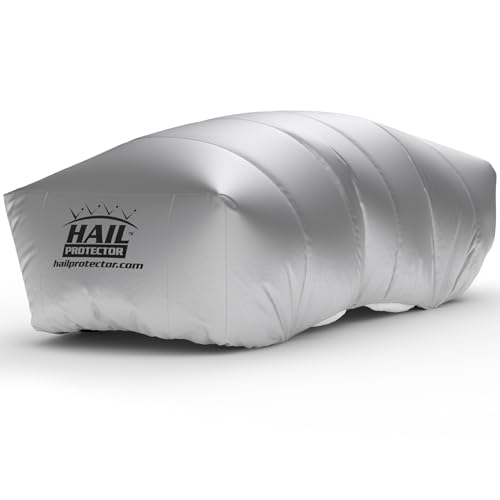
The Hail Protector Inflatable CAR2 is the gold standard when maximum impact defense matters more than convenience or cost.
It uses an air-cushion system rather than foam or fabric layers. When a hailstone hits the inflated shell, the air buffer absorbs and spreads the impact force across a large surface area — something no padded cover can fully replicate.
Key Features
- Air-cushion inflation system → spreads hail impact across a wide buffer zone
- Full-vehicle coverage → protects roof, hood, trunk, and glass simultaneously
- Heavy-duty outer shell → handles extreme wind and rain during deployment
- Wind-secure anchoring system → holds position during active storms
Pros and Cons
Pros
- Best-in-class impact absorption for severe hailstorms
- Covers the entire vehicle including glass panels
- Strongest peace-of-mind option for high-risk regions
- Proven air-cushion technology outperforms fabric alternatives
Cons
- Significantly bulkier storage footprint than padded covers
- Premium price point — highest cost on this list
- Setup time is longer than slip-on fabric options
Pricing
Premium tier — expect to pay significantly more than padded alternatives.
Our Verdict
If you live in Tornado Alley or any region with frequent golf ball-sized hail, this is your cover. No padded alternative delivers the same level of impact defense. The cost is high, but a single avoided repair pays for it.
2. EzyShade 10-Layer Hail Cover — Best Value Padded Option

The EzyShade 10-Layer cover is the most practical everyday pick for buyers who want serious hail protection without the bulk or cost of an inflatable system.
Ten layers of material — including a soft inner lining and a weather-resistant outer shell — provide meaningful impact buffering for moderate hail scenarios.
Key Features
- 10-layer padded construction → improves energy buffering against hail strikes
- Soft inner surface → reduces paint abrasion risk during use and removal
- Elastic hems with tie straps → improve fit and resist wind displacement
- Outdoor-ready outer shell → handles rain, UV, and temperature changes
Pros and Cons
Pros
- Strong price-to-protection ratio for moderate hail zones
- Easier daily use than inflatable or ultra-thick alternatives
- Broad vehicle size availability across the range
- Performs well in mixed weather, not just hail events
Cons
- Not adequate for large or severe hailstones
- More cumbersome than basic lightweight covers
- Protection depends heavily on fit quality and storm intensity
Pricing
Mid-range — meaningfully more affordable than inflatable systems.
Our Verdict
The EzyShade is the default recommendation for most drivers. It balances daily usability with genuine hail defense at a price most buyers find reasonable. Start here if you’re unsure which tier you need.
3. GUNHYI 16-Layer Heavy Duty Cover — Best Thick Padded Option
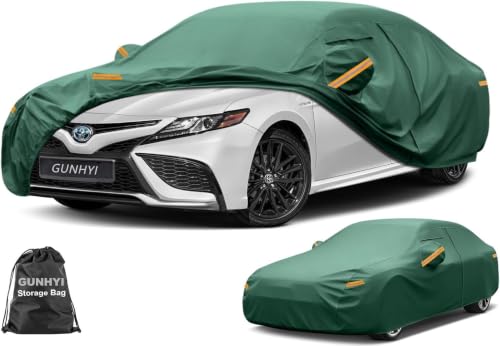
More layers mean more energy to dissipate. The GUNHYI 16-Layer cover takes that logic seriously.
This is the thickest padded fabric option on this list. For buyers who want maximum foam and fabric buffering without moving to an inflatable system, it’s the natural step up from 10-layer alternatives.
Key Features
- 16-layer padded build → more buffering than most fabric-based competitors
- Heavy-duty outer fabric → improves resistance to wind tear and weathering
- Multiple securing points and straps → increase stability during storms
- Year-round outdoor protection → handles UV, rain, and hail in one cover
Pros and Cons
Pros
- Highest layer count of any non-inflatable option reviewed here
- Solid performance in moderate-to-heavy hail scenarios
- More affordable than inflatable systems with strong protection feel
- Good year-round outdoor utility beyond storm season
Cons
- Heavier and more difficult to handle than lighter padded covers
- Installation is slower due to weight and bulk
- Not suitable for softball-sized or extreme hail events
Pricing
Mid-range to upper mid-range — priced between budget picks and premium inflatable systems.
Our Verdict
Choose the GUNHYI if you’ve decided padded is your approach but want the thickest protection that category offers. It’s the heavy-duty choice for buyers who won’t compromise on layer count.
4. Kayme 5mm EVA Hail Protector — Best for Moderate Hail

EVA foam is one of the most effective impact-absorbing materials available for car covers. The Kayme uses a 5mm layer of it.
That 5mm thickness meaningfully absorbs hail energy, especially for pea-to-marble-sized hailstones that represent the most common storm damage scenario.
Key Features
- 5mm EVA foam padding → absorbs hail energy more effectively than layered fabric alone
- Weatherproof outer shell → adds UV, rain, and wind resistance
- Soft inner fleece lining → protects paint during contact
- Secure strap system → maintains cover position in wind
Pros and Cons
Pros
- EVA foam delivers genuine impact absorption at this price point
- Versatile across mixed weather conditions year-round
- Widely compatible with sedans, hatchbacks, and most standard vehicles
- Noticeably better hail defense than ordinary waterproof covers
Cons
- 5mm thickness is not sufficient for large or severe hail
- Bulkier to fold and store than basic fabric alternatives
- Fit quality significantly affects real-world protection
Pricing
Mid-range — competitive for an EVA-padded product.
Our Verdict
The Kayme is the most popular middle-ground option for good reason. It offers credible hail protection for everyday drivers in seasonal hail regions without the setup demands of premium systems.
5. Favoto 5mm XPE Hail Cover — Best Lightweight Padded Option
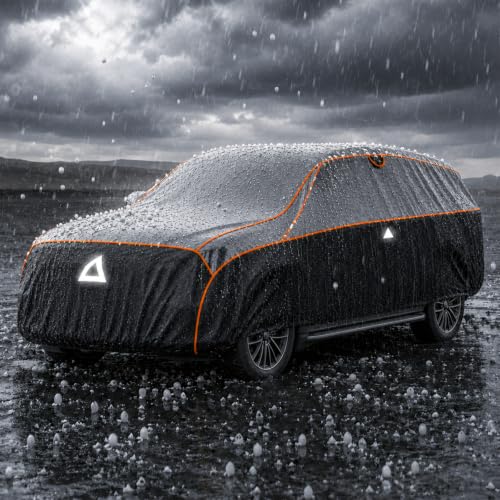
Here’s the trade-off most buyers don’t think about: the thicker a cover, the harder it is to use daily.
The Favoto solves that. XPE foam is lighter than EVA while still providing solid impact absorption, making this cover far easier to deploy and remove on a regular basis.
Key Features
- XPE foam padding → absorbs impact while keeping total weight down
- Lightweight construction → faster on/off for daily outdoor parking
- Weather-resistant exterior → suitable for outdoor use in mixed conditions
- Compact folded storage profile → fits in a standard trunk bag
Pros and Cons
Pros
- Easier to handle than heavier multi-layer or EVA covers
- Offers real hail defense for light-to-moderate storm conditions
- Practical for daily deployment without becoming a chore
- More compact storage than thicker padded competitors
Cons
- Less protective than thicker EVA or 16-layer options
- Not suitable for large hailstones or severe weather events
- Can shift in high winds if not secured carefully
Pricing
Budget to mid-range — one of the more accessible options with foam padding.
Our Verdict
Buy the Favoto if convenience is a genuine priority. It’s the right cover for mild hail regions where you’ll use it regularly and need it to be fast and manageable every time.
6. Seal Skin Supreme — Best All-Weather Hail Cover

Not every car owner has only hail to worry about. Year-round outdoor parking means dealing with UV, heavy rain, bird droppings, and tree debris alongside storm events.
The Seal Skin Supreme handles that full list. It’s built as an all-weather outdoor cover with enough multi-layer padding to provide real hail resistance for light-to-moderate storm conditions.
Key Features
- Multi-layer waterproof and breathable construction → protects in rain, heat, and moderate hail
- Outdoor-rated UV-resistant shell → prevents cover and paint degradation over time
- Secure fit system with straps → stays in position during wind and rain events
- Soft inner lining → reduces scratch risk on paint during extended use
Pros and Cons
Pros
- Best year-round versatility of any cover on this list
- Strong for light hail combined with other outdoor threats
- Durable construction holds up better than basic outdoor covers
- One cover solution for multiple weather scenarios
Cons
- Not specialized for severe hail events
- Costs more than basic weather covers with fewer hail features
- Bulkier than lightweight options for the same protection level
Pricing
Mid-range to premium — priced for its all-weather durability and construction quality.
Our Verdict
Choose the Seal Skin Supreme if hail is one of several outdoor threats you face. It’s the best single-cover solution for drivers who park outside year-round and want genuine protection from all angles.
7. Hail Shelter Severe Impact Car Cover — Best Premium Hail-Focused Alternative
Some buyers want maximum hail focus without committing to an inflatable system. The Hail Shelter Severe Impact cover is built for exactly that buyer.
This is a purpose-designed hail protection cover with premium materials and severe-weather construction throughout. You can learn more about its design approach on the inflatable hail protection system reference page, which outlines how different protection technologies compare.
Key Features
- Severe-impact construction → engineered specifically for hail defense
- Thick premium protective layers → improve absorption against direct strikes
- Full-vehicle body coverage → protects key paint and glass surfaces
- Storm-ready heavy-duty shell → handles high-wind deployment conditions
Pros and Cons
Pros
- Strongest non-inflatable hail protection on this list
- Premium materials and construction quality throughout
- Designed specifically for storm protection, not general outdoor use
- Suited for serious weather exposure in hail-prone regions
Cons
- Premium pricing makes it a significant investment
- Bulky to store and requires dedicated space
- Overkill for drivers in low hail-risk areas
Pricing
Premium tier — priced alongside inflatable options, below only the Hail Protector system.
Our Verdict
If you want top-tier hail protection and prefer a non-inflatable design, this is the pick. It sits directly below the Hail Protector CAR2 in real-world protection and is worth considering if setup simplicity matters to you.
8. Custom-Fit Heavy Duty SUV Cover — Best for SUVs and Trucks
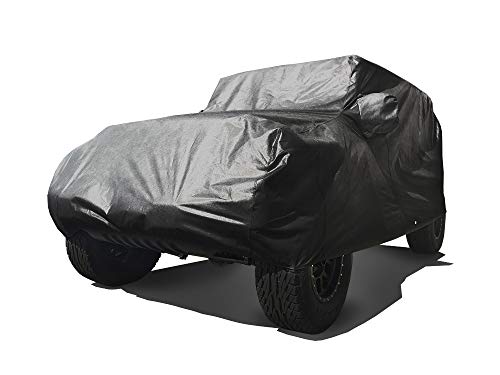
Fit is everything on a large vehicle. A cover that gaps on a full-size SUV or pickup truck provides dramatically less protection than one designed for that body size.
Standard universal covers routinely fail on tall, wide vehicles. A custom-fit heavy-duty cover eliminates that gap by matching your exact vehicle dimensions.
Key Features
- Vehicle-specific sizing → eliminates the gaps that reduce hail and wind protection
- Heavy-duty fabric construction → improves durability on larger body panels
- Reinforced tie-down straps → reduce movement and shifting in storms
- Mirror pockets and antenna accommodations → allow proper installation without stress points
Pros and Cons
Pros
- Better real-world protection on large vehicles than any universal cover
- Stronger wind stability due to accurate fit and secure straps
- Covers full body panel area including side mirrors and roof edges
- More dependable coverage for oversized profiles where gaps cause damage
Cons
- Limited transferability between different vehicle models
- Generally costs more than equivalent universal-fit options
- Bulky to fold and store when off the vehicle
Pricing
Mid-range to premium — custom sizing commands a price premium over universal alternatives.
Our Verdict
If you drive an SUV, pickup, or van, this category wins on fit alone. A cover that fits properly on a large vehicle outperforms a thicker cover that bunches, gaps, or shifts during a storm.
9. Budget Multi-Layer Universal Hail Cover — Best Budget Pick
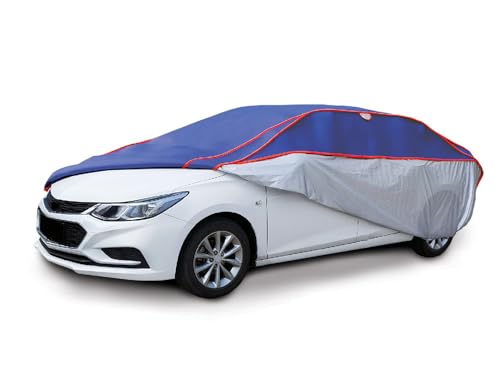
You don’t have to spend a lot to get better protection than nothing. This is the entry point into hail-specific cover design.
A multi-layer universal cover won’t stop golf ball-sized hail, but it will meaningfully reduce risk from pea-to-marble-sized stones — the type of hail that causes most real-world dent claims.
Key Features
- Multi-layer shell → buffers light hail impact better than single-layer alternatives
- Universal fit system → works across a wide range of vehicle types and sizes
- Basic weatherproofing → provides rain, UV, and wind protection alongside hail
- Simple installation design → straightforward on/off for daily use
Pros and Cons
Pros
- Lowest cost entry point for hail-specific protection
- Better storm defense than standard waterproof or dust covers
- Easy to understand and use without a learning curve
- Good starter option for low-risk areas or occasional hail exposure
Cons
- Not adequate for moderate or severe hailstorms
- Lower durability under repeated outdoor use compared with premium picks
- Universal fit can gap or shift on vehicles at the extremes of sizing
Pricing
Budget-friendly — the most affordable option on this list by a clear margin.
Our Verdict
Buy this if budget is the primary constraint and your local hail risk is low. It’s a meaningful upgrade from a basic fabric cover at minimal cost. Upgrade to EVA or XPE padding if hail is a regular seasonal risk.
Comparison Table: Hail Car Cover Types at a Glance
| Cover | Type | Hail Level | Best For | Price Tier |
|---|---|---|---|---|
| Hail Protector CAR2 | Inflatable | Severe | Maximum storm protection | Premium |
| Hail Shelter Severe Impact | Padded premium | Severe–Moderate | Hail-first non-inflatable | Premium |
| GUNHYI 16-Layer | Multi-layer padded | Moderate | Thick padding without inflation | Mid–Upper |
| EzyShade 10-Layer | Multi-layer padded | Moderate | Best everyday value | Mid |
| Kayme 5mm EVA | EVA foam | Moderate | Mainstream everyday driver | Mid |
| Seal Skin Supreme | All-weather padded | Light–Moderate | Year-round outdoor parking | Mid–Premium |
| Custom-Fit SUV Cover | Heavy-duty padded | Moderate | SUV and truck owners | Mid–Premium |
| Favoto 5mm XPE | Lightweight padded | Light–Moderate | Frequent, easy daily use | Budget–Mid |
| Budget Multi-Layer | Basic padded | Light | Low-risk, budget shoppers | Budget |
How to Choose the Right Hail Car Cover
Start with your actual hail risk. Not your neighbour’s. Yours.
The hail damage overview from the Insurance Information Institute shows hail causes billions in vehicle damage annually — but severity varies enormously by region. A driver in central Texas faces a different threat level than one in coastal California.
Consult this car cover buying guide from Consumer Reports for general fit and material quality factors that apply regardless of hail protection level.
Light, Moderate, and Severe Hail — What You Actually Need
Light hail (pea-sized, under ½ inch):
A budget multi-layer or XPE lightweight padded cover is adequate. Skip the premium options.
Moderate hail (marble to golf ball, ½ to 1¾ inch):
Use an EVA foam cover, a 10-layer padded system, or a custom-fit heavy-duty cover. This is the most common real-world scenario.
Severe hail (golf ball to softball, 1¾ inch and above):
Only an inflatable system or premium severe-impact cover provides meaningful defense. Standard padded covers won’t cut it here.
Fit, Setup Speed, and Storage
Fit matters as much as padding. A well-padded cover that gaps on your specific vehicle delivers less protection than a thinner cover that fits properly.
Key features to prioritize:
- Elastic hems — conform to vehicle contours and reduce gap points
- Windproof tie straps — essential in high-wind storm conditions
- Mirror pockets — prevent shifting and stress on cover material
- Vehicle-specific sizing — always preferable on larger vehicles
For year-round protection, also consider what happens between storms. Using the best pressure washers for cars keeps your vehicle clean between cover use, and the best microfiber towels for car detailing are the safest option when wiping down panels after removing any cover.
Best Hail Car Cover for Year-Round Outdoor Parking
Year-round outdoor parking creates compound threats. Hail is seasonal, but UV, acid rain, bird droppings, and tree contamination are daily.
A standard hail cover that’s uncomfortable to use daily will end up unused. That’s the real risk here.
The Seal Skin Supreme solves this. It’s built for year-round outdoor use with meaningful hail resistance included, not as an afterthought.
All-Weather Protection Factors
Outdoor exposure creates multiple paint threats beyond hail:
- UV degradation causes paint oxidation over months of direct sun exposure
- Standing water and minerals leave car water spots that etch paint over time
- Post-storm glass needs attention — knowing how to remove water spots from car windows prevents long-term damage
- Does tree sap ruin car paint? Yes — and outdoor parking under trees makes that a genuine risk alongside hail
Breathability Matters
A waterproof cover that traps moisture underneath accelerates rust and paint issues. Look for a waterproof-but-breathable construction that lets humidity escape without letting rain in.
FAQs About Hail Car Covers
Can a car cover really stop hail dents?
Yes — but only if it contains impact-absorbing material. EVA foam, XPE foam, or inflatable cushioning systems all reduce denting. A standard weather cover does not.
Do thicker covers always perform better?
Not always. An inflatable system outperforms a 16-layer padded cover in severe hail despite having fewer material layers. Mechanism matters more than raw thickness.
Are inflatable hail covers worth the price?
For drivers in severe hail zones, yes. One avoided major repair easily covers the cost. For drivers in mild hail areas, a padded mid-range cover offers better value.
How do you store and maintain a hail car cover?
Store folded in the included carry bag when not in use. Clean periodically with mild soap and rinse thoroughly. Allow the cover to dry completely before folding to prevent mold.
For broader vehicle care after storm season, explore car detailing resources to restore paint and interior condition after extended outdoor exposure.
Final Verdict: Which Hail Car Cover Should You Buy?
Here’s the honest answer. It depends on your storm risk level and how often you’ll use the cover.
Buy the Hail Protector Inflatable CAR2 if severe hail is a real seasonal threat. It’s the only option that provides true impact defense against large hailstones.
Buy the EzyShade 10-Layer or Kayme EVA if moderate hail is your primary concern and you want a practical daily solution at a fair price.
Buy the Favoto XPE if convenience is your priority and your hail risk is light.
Buy the Custom-Fit SUV Cover if your vehicle is large and fit is the biggest gap in your current setup.
Buy the Budget Multi-Layer only if cost is the main constraint and your hail exposure is low.
After any storm, use the best air blowers for car detailing to safely dry your vehicle after cover removal — they prevent the swirl marks that towel drying can leave on wet paint.
The right cover isn’t always the most expensive one. It’s the one that matches your actual risk, fits your vehicle properly, and gets used consistently every time a storm threatens.
That last part matters more than any spec on the label.