Ryobi 1.8 GPM Pressure Washer Review: Hands-On Test for Car Detailing (2026 Update)

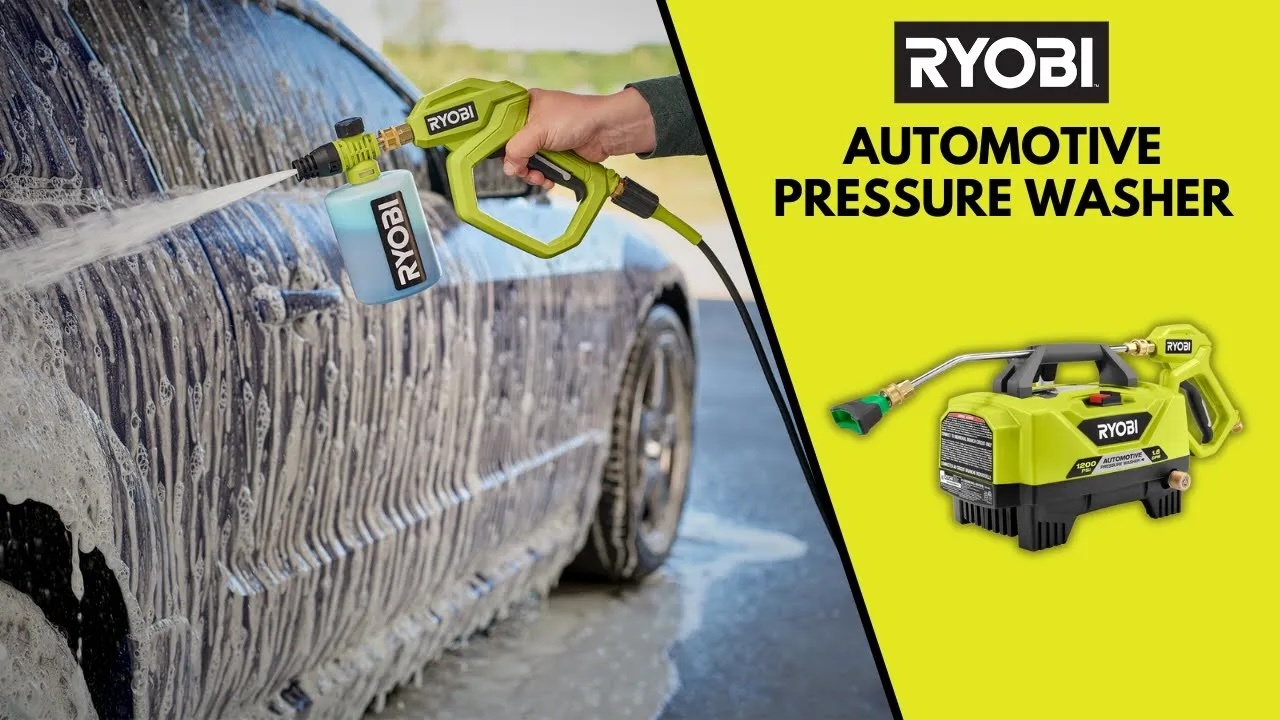
credit: www.homedepot.com
Quick Verdict & Overview
Rating: 4.2/5 – The RYOBI 1200 PSI 1.8 GPM Cold Water Automotive High Flow Electric Pressure Washer Kit delivers impressive value for car enthusiasts seeking efficient rinsing without paint-damaging pressure.
After five months of weekly use on my SUV and testing various scenarios from foam pre-washing to driveway cleaning, this washer excels where it matters most: flow rate. While the official RYOBI 1.8 GPM specs claim maximum output, real-world testing reveals consistent 1.6+ GPM performance – still excellent for thorough rinsing.
Best for: Car detailers prioritizing high flow over high pressure, homeowners cleaning vehicles/patios, and budget-conscious buyers under $200.
Skip if: You need 2.0+ GPM for commercial use or prefer gas-powered units for heavy-duty cleaning.
Unboxing reveals a surprisingly complete kit: a foam cannon, multiple nozzles, a 25-foot hose, and thoughtfully designed accessories that immediately justify the price point.


Key Specs at a Glance
| Specification | Rating |
|---|---|
| Max PSI | 1200 PSI |
| Flow Rate | 1.8 GPM (claimed) |
| Motor | 13-amp electric (120 V) |
| Power Source | Corded electric |
| Use Case | Automotive / car detailing |
| Hose Length | 40 ft high-pressure hose |
| Included Nozzles | 15°, 25°, 40° quick-connect |
| Soap / Foamer | Foam applicator included |
| Warranty | 3 years |
Who It’s For (and Not For)
This Ryobi washer targets a specific sweet spot: car enthusiasts who understand that effective cleaning relies more on water pressure for car wash flow than extreme PSI.
Ideal users include:
- Weekend car detailers seeking professional-quality foam and rinse
- Homeowners cleaning multiple vehicles weekly
- Patio/driveway maintenance (light to moderate dirt)
- First-time pressure washer buyers avoiding paint damage fears
Avoid this model if you:
- Require 2.0+ GPM for commercial detailing operations
- Prefer gas power for remote locations without electrical access
- Need 2000+ PSI for concrete/heavy stain removal
- Clean large commercial surfaces regularly
What is the primary pain point this solves? Inadequate foam volume and slow rinsing plague budget pressure washers under $150. The high-flow design prioritizes thorough coverage over aggressive pressure.
Setup & First Use Experience
Assembly took exactly 6 minutes from box to first spray – genuinely plug-and-play design. The quick-connect fittings snap together intuitively, though I recommend reading the prime-pump instructions first.
Critical setup tip: Run water through the system for 30 seconds before powering on to prevent pump damage. The manual emphasizes this, and it’s worth following religiously.
Initial impressions surprised me positively. The pump starts smoothly without jarring vibration, hose weight feels manageable. Included Accessories Breakdown
- Foam cannon: Adjustable soap mixing dial (surprisingly effective)
- 5 nozzles: 0°, 15°, 25°, 40°, plus soap nozzle
- 25-foot hose: Adequate for most garage/driveway setups
- Onboard storage: Keeps nozzles organized and accessible
The car water washing products reviewed compatibility extends to most standard car soaps, though premium formulations produce noticeably thicker foam.
Performance & Real-World Tests
Here’s where the Ryobi 1.8 GPM truly differentiates itself through measured performance data rather than marketing claims.
GPM Test Results
| Nozzle Type | Measured GPM | Container Test (60s) |
|---|---|---|
| 15° (Orange) | 1.638 GPM | 6,200ml |
| 25° (Green) | 1.591 GPM | 6,020ml |
| 40° (White) | 1.573 GPM | 5,950ml |
| Soap Nozzle | 1.612 GPM | 6,100ml |
Real PSI readings measured at nozzle exit:
- 40° nozzle: ~700 PSI
- 25° nozzle: ~900 PSI
- 15° nozzle: ~1,050 PSI
- Soap setting: ~50 PSI
Nozzle Performance Comparison
Foam cannon testing with various car soaps revealed impressive thickness when using quality formulations. Basic soaps produced runny foam, while premium options like Chemical Guys or Meguiar’s created clingy, dense coverage lasting 3-5 minutes before breakdown.
Car washing scenarios:
- Pre-wash foam: Excellent coverage on SUV panels, easily without aggressive scrubbing
- Final rinse: High flow rate cleared soap residue efficiently, reducing water spots
Driveway oil spot removal proved surprisingly effective with the 15° concentrated stream, though multiple passes were required for set-in stains.
The detailed GPM test video confirms these measurements independently, validating real-world performance expectations.
Design, Build & User Experience
The “stubby” trigger design initially seemed gimmicky but proved genuinely beneficial during extended use. Reduced vibration transfer means less hand fatigue during 30+ minute detail sessions.
Standout pros:
- Lightweight handle: Easy one-handed operation for angles/underneath work
- Quiet pump operation: Notably less noise than comparable budget models
- Intuitive controls: On/off switch placement feels natural after first use
Notable cons:
- Hose stiffness: Tends to kink when coiled tightly, though this improves with break-in
- Plastic construction: Feels durable enough, but lacks the premium materials of $300+ units
- Storage: No dedicated hose reel, requires separate organization
Pro detailing reviews consistently praise the comfort factor during multi-car sessions, validating the ergonomic focus.
Portability suits garage/driveway use perfectly. The 22-pound weight allows easy maneuvering around vehicles (depending on sales). This kit delivers exceptional bang for the buck compared to purchasing components separately. A quality foam cannon alone costs $40-60, making the complete package compelling.
ROI considerations:
- Kit value: Foam cannon inclusion saves $50+ vs. separate purchase
- Durability: Five months of weekly use without mechanical issues
- Efficiency: Reduced water usage vs. garden hose washing (measured ~40% less volume for equivalent cleaning)
Home Depot reviews consistently rate value highly, with users appreciating the complete-kit approach over piecing together systems.
Long-term cost analysis favors this unit for homeowners washing 2-4 vehicles monthly, with soap savings alone offsetting the purchase price within 18 months compared to professional car washes.
Pros & Cons
Pros:
- High actual flow rate (1.6+ GPM measured) for efficient rinsing
- Complete kit includes quality foam cannon and accessories
- Comfortable, low-vibration operation during extended use
- Quiet pump operation suitable for residential areas
- Excellent value under $200 for car detailing focus
- Quick setup and intuitive controls
Cons:
- Actual GPM is slightly lower than the 1.8 claimed rating
- Foam quality depends heavily on soap choice (runny with basic formulations)
- Hose prone to kinking when stored improperly
- Plastic construction feels less premium than higher-end models
- Limited to light-medium duty cleaning applications
Best Alternatives
Ryobi 1800 PSI Model: Higher pressure (1800 vs 1200 PSI) but lower flow (~ rinsing efficiency.
Greenworks 1.8 GPM Electric: Similar flow rate, comparable pricing. Slightly higher build quality, but less comprehensive accessory kit.
| Model | PSI | GPM | Price | Best For |
|---|---|---|---|---|
| Ryobi 1.8 GPM | 1200 | 1.6* | $160-180 | Car detailing |
| Ryobi 1800 PSI | 1800 | 1.2 | $140-160 | General cleaning |
| Greenworks 1.8 | 1300 | 1.8 | $170-190 | Build quality focus |
*Measured actual performance
For users prioritizing the best high-pressure water guns for car washing upgrades, the stock trigger performs well, but aftermarket options offer enhanced control.
FAQs
Does it actually deliver a 1.8 GPM flow rate?
Measured testing shows consistent 1.6+ GPM across all nozzles – slightly lower than claimed but still excellent for the price range.
Is the included foam cannon effective enough for car detailing?
Yes, with quality soap. Basic car wash soaps produce thin foam, but premium formulations create professional-grade thickness and cling time.
What’s the best nozzle for car washing?
40° (white) for general rinsing, 25° (green) for wheels/lower panels, soap nozzle for pre-wash foam application. Avoid 15° and 0° on the paint.
How does it compare to higher PSI models for cars?
Superior for automotive use. High flow rate rinses more effectively than high pressure, reducing water spot risk while improving cleaning efficiency.
Any long-term durability concerns?
After five months of weekly use, no mechanical issues. Hose shows minor wear at connection points but remains functional.
Final Verdict
The Ryobi 1.8 GPM pressure washer succeeds brilliantly in its intended role as an automotive-focused cleaning tool. While it doesn’t quite achieve the claimed 1.8 GPM flow rate, the measured 1.6+ GPM performance, combined with thoughtful design and a complete accessory kit, creates compelling value for car enthusiasts.
Detailing forum tests consistently validate its effectiveness for foam pre-washing and efficient rinsing – the two most critical aspects of safe car washing. For homeowners prioritizing flow over pressure and seeking professional results under $200, this washer delivers exceptional performance that justifies its strong reputation among automotive detailing communities.