6 Best Ozone Generators for Cars in 2026: Top Picks for Tough Odors

Ozone treatments oxidize odor-causing compounds at the molecular level. That’s a powerful process — but it has real limits.
Ozone is not a cleaning agent. It won’t remove smoke residue from your headliner, extract pet dander from carpet fibers, or replace a contaminated cabin filter. Before any ozone session, clean the odor source first. Only then does ozone treatment actually eliminate what’s left behind, rather than masking it temporarily.
Every generator on this list was chosen based on output control, timer accuracy, power options, portability, and vehicle-size fit. And one rule applies to every single one: the vehicle must be completely unoccupied during treatment. No people, no pets, no plants — not even briefly. The EPA guidance on ozone generators makes this clear, and it’s non-negotiable.


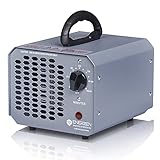

Best Ozone Generators for Cars at a Glance
| Product | Best For | Output | Timer | Power |
|---|---|---|---|---|
| PROGRACE 148,000mg/h | Large vehicles | Very high | Yes | AC |
| Charmline 2-in-1 | Mobile detailing | High | Yes | AC + 12V |
| Enerzen 60,000mg | Budget buyers | High | Yes | AC |
| ONAMOR 180,000mg | Precise workflows | Extreme | Digital | AC |
| Enerzen O-888 | Musty odors | High | Yes | AC |
| Airthereal MA10K-PRO | Passenger cars | Moderate | Mechanical | AC |
Coverage ratings from manufacturers are based on room square footage. They don’t translate directly to vehicle cabin treatment. Use output and timer together to control your sessions.
1. PROGRACE 148,000mg/h Ozone Generator — Best Overall for Large Vehicles

The PROGRACE is the go-to pick for SUV owners, van operators, and professional detailers handling heavily contaminated interiors. High output shortens treatment time for large cabins, but it demands careful timer management.
Key Features
- Very high ozone output → supports short, intensive sessions in larger vehicle interiors
- Large-capacity housing → better matched to vans, SUVs, and commercial-grade work
- Built-in timer → limits unattended operation without manual supervision
- Portable design → moves easily between vehicles or job sites
Pros and Cons
Pros
- Strong capacity handles severe cigarette and mildew odors
- Faster treatment cycles for large-cabin vehicles
- Useful for professional detailing workflows
Cons
- Excessive for compact cars or light odor jobs
- Very high output increases risk from mistimed sessions
- Manufacturer output claims require verification against real use
Pricing
Mid-range to premium tier — competitive for professional or repeated detailing use.
Our Verdict
The PROGRACE suits detailers and owners of larger vehicles who need real output for real jobs. For a compact sedan with mild odors, it’s more machine than you need.
2. Charmline 2-in-1 Ozone Generator — Best for 12V and AC Power

Flexibility is the entire point here. The Charmline runs from a standard wall outlet or directly from your vehicle’s 12V socket — a real advantage for mobile detailers working without garage access.
Key Features
- AC and 12V dual power → enables treatments at home, roadside, or on a job site
- Remote control operation → starts and stops sessions without entering the cabin
- Compact portable format → fits easily into a mobile detailing kit
- Timer controls → supports short, repeatable treatment cycles
Pros and Cons
Pros
- Dual-power flexibility is unmatched in this category
- Remote control keeps you safely outside the vehicle during treatment
- Strong output covers most odor scenarios
Cons
- 12V performance may fall slightly below AC operation
- Additional controls can complicate first-time setup
- High output still requires conservative timing in small cabins
Pricing
Mid-range tier — reasonable for mobile detailers factoring in its dual-power capability.
Our Verdict
If you detail cars away from a fixed power source, the Charmline is the most practical choice here. The best generator for mobile detailing pairs well if you need AC power on the road too.
3. Enerzen 60,000mg Ozone Generator — Best Budget High-Output Option
The Enerzen 60,000mg delivers substantial ozone output at a price that suits occasional users. It doesn’t offer digital displays or remote controls. It doesn’t need to.
Key Features
- 60,000mg/h output → strong enough for cigarette, food, and pet odors in ordinary cars
- Simple timer controls → limits sessions without complicated setup
- Compact housing → stores easily between uses
- Straightforward interface → minimal learning curve for first-time users
Pros and Cons
Pros
- Competitive pricing for the output class
- Simple controls reduce setup errors
- Handles most common car odor situations
- Practical for occasional DIY use
Cons
- Fewer advanced features for professional workflows
- Build quality and output consistency should be verified independently
- May feel like overkill for very light odors
Pricing
Budget to lower-mid-range — the most accessible entry point in this list.
Our Verdict
The Enerzen 60,000mg is the right call for DIY owners who want real output without spending on features they won’t use. It’s honest, uncomplicated value.
4. ONAMOR 180,000mg Ozone Generator — Best for Precise Timed Treatments

Extreme output is only useful when you can control it precisely. The ONAMOR combines very high ozone production with a digital timer — making it the strongest option for detailers who run documented, repeatable treatment protocols.
Key Features
- Digital timer → allows precise session lengths across different vehicle sizes
- 180,000mg/h class output → handles large interiors and severe embedded odors
- Extended timing capability → supports different treatment workflows
- High-capacity construction → built for frequent, professional-grade use
Pros and Cons
Pros
- Digital controls improve session repeatability
- Highest output capacity on this list
- Adaptable to compact, midsize, and large vehicle workflows
- Strong fit for professional detailing businesses
Cons
- Genuinely overpowered for small car cabins
- Incorrect timing with this output level creates real risk
- Occasional users gain little advantage over lower-output options
Pricing
Mid-range to premium tier — best justified for professional or high-volume use.
Our Verdict
The ONAMOR rewards detailers who document their workflow. Run it short in a compact car, longer in a van — but always log your times and air-out intervals.
5. Enerzen O-888 — Best for Stubborn Musty Odors

Musty smells are stubborn for a reason. They’re embedded in carpet backing, foam padding, HVAC ducting, and cabin air filters. This is where the Enerzen O-888 earns its place.
Key Features
- Cycling treatment capability → supports a methodical, repeatable odor-removal process
- High-output design → penetrates embedded odors in older or neglected interiors
- Timer-based operation → reduces manual supervision requirements
- Portable format → practical for use across multiple vehicles
Pros and Cons
Pros
- Well-suited to older vehicles with long-term embedded odors
- Timer operation supports repeated detailing sessions
- Solid output for difficult jobs
- Practical for professional detailers working on vehicle fleets
Cons
- Cannot resolve active moisture — fix the source first
- Musty odors return if carpets or HVAC remain contaminated
- More capacity than casual users typically need
Pricing
Mid-range tier — appropriate for detailers handling repeated musty-odor jobs.
Our Verdict
Before running the O-888, replace the cabin filter, dry any damp areas, and clean the carpets thoroughly. The ozone session is the last step — not the first.
6. Airthereal MA10K-PRO — Best Moderate-Output Workhorse

Not every car needs 180,000mg/h of ozone. Most don’t.
The Airthereal MA10K-PRO delivers controlled output that matches the actual scale of a passenger car cabin. That’s its advantage. Less output means less risk of over-treating a small enclosed space.
Key Features
- Moderate output → better calibrated to compact and midsize car interiors
- Mechanical timer → straightforward, reliable session control
- Compact construction → easy to store and transport
- Established general-purpose design → effective beyond vehicles when used safely
Pros and Cons
Pros
- Output scale suits most passenger cars accurately
- Simple mechanical timer reduces user error
- Easy to store between uses
- Discourages unnecessarily aggressive treatment
Cons
- Slower for large vans or heavily contaminated interiors
- Fewer advanced monitoring controls
- Still requires full ventilation after every session
Pricing
Budget to mid-range — the most cost-effective long-term option for passenger-car owners.
Our Verdict
If you own one car and treat it occasionally, the Airthereal MA10K-PRO is the most sensible choice. Skip the extreme-output units unless your vehicle genuinely needs them.
How to Choose the Best Ozone Generator for a Car
Choosing by output rating alone leads buyers to overpowered machines they can’t use safely. Here’s what actually matters.
Output (mg/h): Treat milligrams per hour as a comparison metric, not a performance guarantee. Higher output is not automatically better for smaller cabins. Check the air-cleaning device certification guidance from the California Air Resources Board before purchasing.
Timer: A reliable timer is more important than raw output. It limits your session length and reduces over-treatment risk. Digital timers improve repeatability; mechanical timers are simpler.
Power source: AC power suits home garage use. 12V capability matters for mobile detailers without extension-cord access. The Charmline is currently the only dual-power option in this list.
Vehicle size: A compact sedan needs a different approach than an SUV or cargo van. Match output to cabin volume, not to the largest number on the box.
Controls and safety features: Automatic shutoff, remote operation, and clear displays all improve safe, consistent use.
Maintenance: Check whether replacement ozone plates or components are available for the model you choose.
Before any treatment, complete a full interior clean. The guide on how to detail the inside of a car walks through every step. For fabric and carpet, a good extractor vacuum for car detailing pulls out odor-holding debris that vacuuming alone misses.
Professional detailers should also review OSHA ozone safety guidance before operating high-output equipment in a commercial setting.
How to Use an Ozone Generator in a Car Safely
This section is not optional reading. Ozone damages the lungs and airways. That’s not a theoretical risk.
Follow this sequence every time:
- Remove all occupants. People, pets, and plants must leave the vehicle and the surrounding area.
- Clean the odor source first. A good portable car vacuum cleaner removes loose debris. Use air blowers for car detailing to dry seams, vents, and carpet edges before treatment.
- Position the generator according to its instructions, typically on the floor or seat.
- Close all windows and doors. Set the timer. Leave immediately.
- Never sit inside the vehicle while the generator is running.
- After treatment ends, switch off the unit, open all doors and windows, and ventilate fully.
- Wait. Don’t re-enter until the cabin smells clean and no ozone odor remains.
The EPA guidance on ozone and health outlines respiratory risks from inhalation. Separately, NIOSH ozone exposure information from the CDC reinforces why re-entry timing matters as much as treatment time.
Does Ozone Remove Smoke and Pet Odors Permanently?
Ozone can help oxidize odor compounds. It cannot remove the residue, particles, or contamination that created them.
Smoke smell lives in headliners, foam seating, carpet backing, dashboard seams, and cabin filters. Ozone alone won’t reach all of it. Learning how to steam clean inside of car surfaces before treatment gives the ozone a cleaner substrate to work on.
Pet odors need physical removal first. Read the guide on how to remove pet hair from car seats and carpet before running any ozone session. Enzyme cleaners should precede ozone treatment for urine odors.
Odor returning after treatment almost always signals an untreated source — damp carpet, a contaminated filter, or smoke residue in the HVAC system. If you’re completing a full vehicle refresh, addressing restore plastic car interior surfaces and reviewing car water spots causes and prevention rounds out the full interior-and-exterior reset.
No ozone generator permanently eliminates odors when the source remains.
Final Verdict
For most car owners, the Airthereal MA10K-PRO is the right starting point. It matches the actual scale of a passenger car cabin and keeps treatment risk manageable.
If you own or detail SUVs and vans, the PROGRACE 148,000mg/h delivers the output you need.
Mobile detailers should choose the Charmline 2-in-1 for its dual-power flexibility.
Budget buyers get strong value from the Enerzen 60,000mg without paying for features they won’t use.
Safe operation matters more than maximum output. Choose the generator that fits your vehicle, not the one with the largest number. While you’re completing a full refresh, the guide to the best car wash soap for ceramic coating helps protect your exterior finish, and tips on how to wash car without hose are useful if you’re detailing without full garage access.