What Color Nozzle Should You Use to Pressure Wash a Car?

Use the white 40-degree nozzle. That’s the short answer. It delivers enough spray force to rinse dirt without stripping wax or damaging paint. For car washing, it’s the safest default for almost every situation.
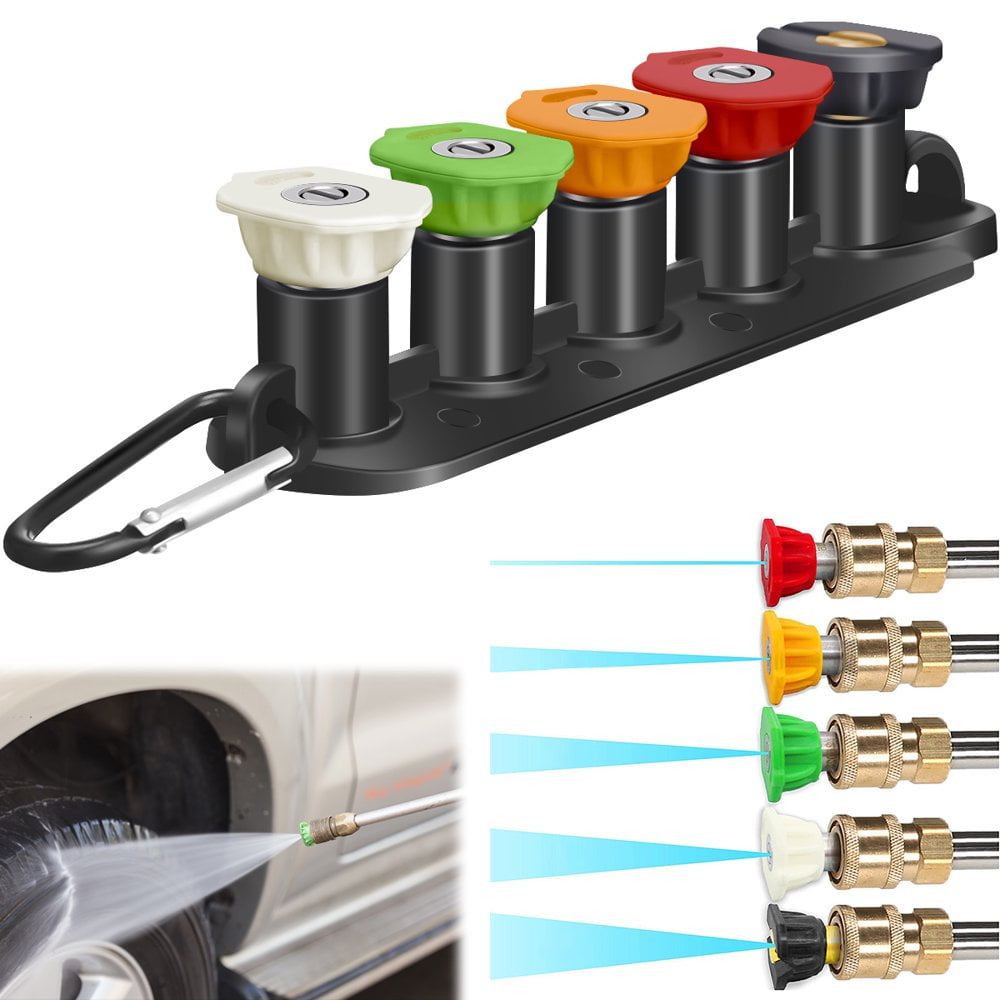
credit: walmart.ca
The Short Answer: Use the White 40-Degree Nozzle
The white nozzle sprays at a wide 40-degree fan angle. That spread distributes pressure across a broad surface, which keeps the force gentle enough for clear coats and painted panels.
The black soap nozzle is also essential. Use it only for applying automotive detergent or foam — never for rinsing. Think of it as a pre-soak tool, not a cleaning nozzle.
Start your wash routine with black, then switch to white for rinsing. That two-step flow works for most DIY jobs.
What Each Nozzle Color Means
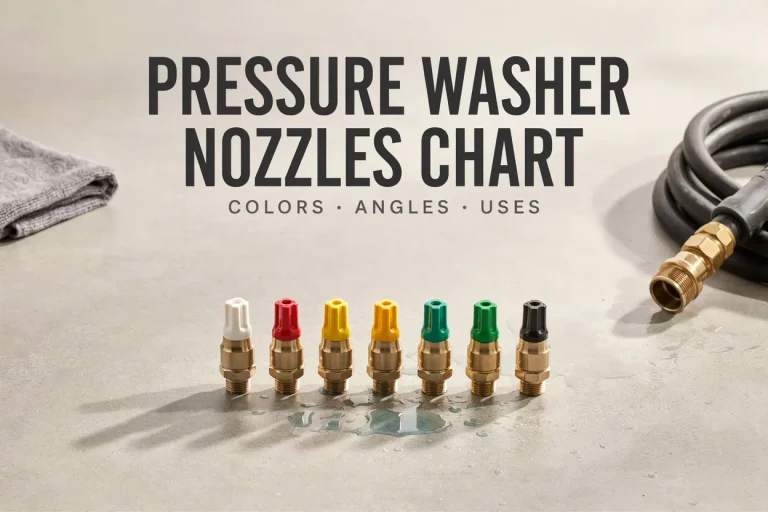
Here’s the standard quick-connect nozzle color chart. Pair it with the right best high-pressure water guns for car washing for better control.
| Color | Spray Angle | Best Use |
|---|---|---|
| Red | 0° | Concrete, drains (never use on cars) |
| Yellow | 15° | Hard surfaces, not paint |
| Green | 25° | Wheels, tires, undercarriage |
| White | 40° | Car body panels, glass |
| Black | 65° | Soap/detergent application |
Narrower angles concentrate pressure into a smaller area. More concentrated pressure means more risk. Red and yellow nozzles can strip paint, damage trim, and blast water under seals.
Which Nozzle for Different Parts of the Car?
Don’t use the same nozzle everywhere. Different surfaces need different spray angles.
- Body panels and glass: white 40-degree nozzle only
- Wheels and tires: green 25-degree nozzle is acceptable
- Undercarriage: green 25-degree for stubborn buildup
- Soap application: black 65-degree nozzle before rinsing
- Badges, trim, and rubber seals: white 40-degree, held further back
Avoid red and yellow on painted surfaces entirely. There’s no situation where that risk is worth it.
Nozzle Mistakes That Can Damage Paint
Distance matters as much as nozzle choice. Holding any nozzle 4 inches from paint concentrates pressure dangerously — even with the white tip.
Stay at least 12 to 18 inches back from the panel. Always test on an inconspicuous spot first, like the lower door jamb.
Don’t linger in one spot. Keep the wand moving.
Quick Pressure Washing Tips for Safer Car Cleaning
Work from top to bottom — roof first, sills last. Use a car-specific soap like those in our guide to best car wash soap for hard water to reduce spotting.
After rinsing, dry fast. Use best microfiber towels for car detailing or a touchless option like the best air blowers for car detailing to avoid water marks. Hard water leaves mineral deposits — learn more in our car cleaning water quality science guide.
Check your best pressure washers for cars PSI setting too. Most car-safe machines run between 1,200 and 1,900 PSI.
When to Use a Different Nozzle
Switch to the green 25-degree nozzle for heavy grime on wheels or underneath the car. Stubborn brake dust and road salt often need that extra bite.
Still see spots after washing? Our car water spots causes prevention removal guide explains why they form and how to fix them. The nozzle choice only solves part of the problem — water quality and drying technique complete the picture.