Best Car Wheel Brushes: 7 Top Picks for Safe, Fast Wheel Cleaning

Wheels are the hardest-working surface on your car. Brake dust, road grime, and heat cycles combine into a sticky mess that a regular wash mitt can’t touch — and the wrong brush can scratch a polished finish in seconds.
This guide covers the seven best car wheel brushes for 2026, organised by real cleaning need rather than brand popularity.
Why the Right Wheel Brush Matters
Wheels take the most abuse of any exterior surface. Brake dust contains metallic particles that bond to rims under heat, and once baked on, they resist standard car shampoo. You need the right agitation tool to break that bond safely.
Not all wheels are equal. Cast alloy, powder-coated, chrome, painted, and polished finishes each respond differently to bristle hardness. A brush that’s fine for a budget steel rim can leave swirl marks on a gloss black alloy. Understanding your wheel finish before buying any brush is the most important step.
Poor brush choice also leads to missed areas. Tight multi-spoke designs, deep barrels, and recessed lug nuts each need a different brush head shape. Understanding car water spots causes, prevention, and removal helps here too — mineral deposits from rinse water accumulate in the same tight areas brake dust hides. If you’re building a full exterior routine, how to remove water spots from car windows is a useful next step.
Brush types you’ll see in this guide include traditional flat-face brushes, barrel brushes for inner wheel cleaning, narrow spoke brushes, and wheel woolie-style tools. Each solves a specific problem.

1. Chemical Guys BHSKIT300 Big Mouth Wheel Brush — Best Overall
The Chemical Guys Big Mouth Wheel Brush is the most balanced pick for everyday detailers. It handles deep barrel cleaning, spoke faces, and wheel lips without switching tools. If you own one wheel brush, this is it.
Key Features
- Extra-long handle reaches deep wheel barrels on flush-fitment designs
- Soft, densely packed synthetic bristles are safe on painted and clear-coated alloys
- Flexible brush head bends around spokes and curved inner lips
- Non-scratch core prevents metal contact with delicate finishes
Pros and Cons
Pros
- Handles barrel, face, and lip cleaning with a single tool
- Bristles release brake dust cleanly without retaining grit
- Long handle reduces hand contact with contaminated surfaces
- Widely available and backed by a known detailing brand
Cons
- Larger head can miss very narrow spoke gaps on complex designs
- Handle length makes storage slightly awkward
Pricing
Mid-range single brush price. Frequently sold in multi-brush kits for better value.
Our Verdict
The Chemical Guys Big Mouth suits most car owners who want one reliable brush that covers all basic wheel areas. It’s the first brush to buy before you consider adding a spoke brush or woolie.

2. Mothers 155800 Wheel Brush — Best Budget
You don’t need to spend much to clean wheels effectively. The Mothers 155800 delivers solid all-round performance at an entry-level price point that’s hard to beat.
Key Features
- Soft, flagged-tip bristles protect alloy and painted wheel finishes
- Medium-length handle balances reach and control during use
- Compact brush head fits most standard spoke gaps and wheel faces
- Durable construction holds up across repeated wash cycles
Pros and Cons
Pros
- Affordable without sacrificing bristle safety on alloys
- Compact enough for both spoke cleaning and wheel face use
- Easy to rinse and dry between wash sessions
- Good option for beginners starting a detailing kit
Cons
- Shorter handle limits reach on deep-barrel wheels
- Not ideal for severe brake dust buildup on performance cars
Pricing
Budget tier. One of the most affordable quality wheel brushes currently available.
Our Verdict
The Mothers 155800 is the right choice for casual weekend washers who clean standard alloys and don’t deal with heavy brake contamination. Skip it if your wheels have deep barrels or heavy track use.

3. Wheel Woolie WW-15-MF — Best Wheel Woolie-Style Brush
Wheel woolies work differently from bristle brushes. They’re flexible, looped microfiber wands that slide into barrel depths traditional brushes struggle to reach.
Key Features
- Long flexible wand reaches deep inside wheel barrels with minimal effort
- Microfiber loop construction is paint-safe and scratch-free on all finishes
- Handles barrels, centre caps, and lug nut recesses in one sweep
- Available in three sizes to match different wheel depths and openings
Pros and Cons
Pros
- Outstanding for inner barrel cleaning on low-profile or flush-fitment wheels
- Microfiber material holds cleaning solution for extended dwell time
- Extremely gentle on chrome, polished, and sensitive finishes
- Packable and lightweight for mobile detailers
Cons
- Less effective on baked-on brake dust without a pre-soak
- Microfiber requires thorough rinsing to avoid grit retention
Pricing
Mid-range to premium, depending on the size set purchased.
Our Verdict
The Wheel Woolie WW-15-MF is the definitive choice for barrel cleaning on performance or luxury vehicles. Pair it with a flat-face brush for complete coverage on complex wheel designs.
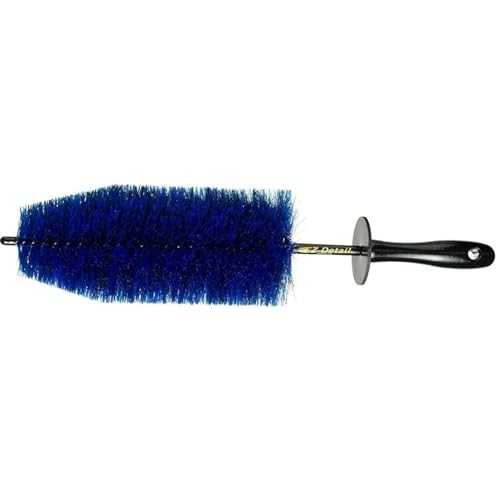
4. EZ Detail Brush Big Blue — Best for Tight Spokes and Lug Nuts
Multi-spoke wheels are a cleaning nightmare. The EZ Detail Brush Big Blue is built for exactly that — a long, flexible, narrow-head brush that threads through spoke gaps most tools can’t reach.
Key Features
- Slender nylon brush head fits spoke gaps as narrow as 25mm
- Flexible spine bends and twists around complex spoke geometry
- Extended handle keeps hands clear during deep interior cleaning
- Soft outer bristles protect spoke edges and painted surfaces
Pros and Cons
Pros
- Best-in-class access to tight spoke gaps and lug nut recesses
- Flexible enough for curved spoke designs and layered wheel faces
- Nylon bristles effectively agitate without scratching alloy surfaces
- Long-proven tool trusted by professional detailers
Cons
- Head is too narrow for efficient full-face or barrel cleaning
- Works best paired with a wider brush in your kit
Pricing
Mid-range. Often sold alongside the smaller EZ Detail Brush for lug nuts.
Our Verdict
If your car has complex multi-spoke alloys or AMG/RS-style mesh designs, the EZ Detail Brush is the one brush no other tool replaces. It’s a specialist, not a daily driver.

5. Griots Garage 55498 Wheel Brush — Best Soft Brush for Delicate Wheels
Delicate finishes need delicate tools. The Griots Garage 55498 uses ultra-soft bristles that won’t mark chrome, satin black, or high-gloss polished surfaces — even under aggressive scrubbing.
Key Features
- Ultra-soft synthetic bristles rated safe on all wheel finishes including chrome
- Medium-width head balances face coverage with spoke access
- Contoured non-slip handle reduces fatigue across a full four-wheel wash
- Bristle density holds cleaning solution for effective single-pass cleaning
Pros and Cons
Pros
- Safe on the most sensitive finishes without compromising agitation
- Well-balanced handle design reduces wrist strain during use
- Bristles don’t flatten after repeated use, maintaining effective cleaning contact
- Works with both spray wheel cleaners and traditional soapy water
Cons
- Ultra-soft bristles need a pre-soak on heavy brake dust contamination
- Higher price than basic wheel brushes
Pricing
Upper mid-range. Reflects premium bristle construction and Griots’ detailing pedigree.
Our Verdict
The Griots Garage 55498 is the only brush to consider if you own black chrome, custom painted, or high-end OEM alloys. Don’t risk a cheaper brush on a £3,000 set of rims.
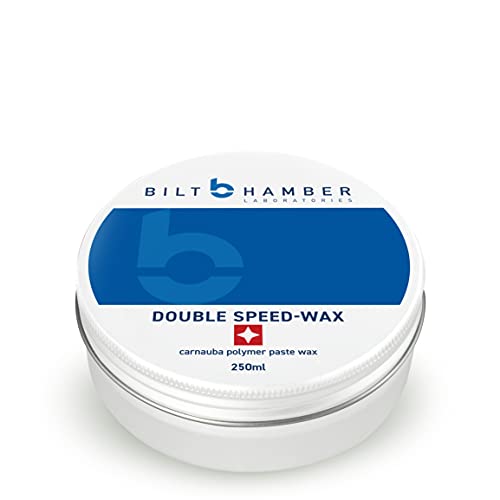
6. Bilt Hamber Wax N Brush (Vikan 53662) — Best for Heavy Brake Dust
Heavy brake dust is a different problem. EVs, track cars, and daily drivers in stop-start city traffic build up thick, baked contamination that soft brushes can’t shift without hours of soaking. The Vikan 53662 is the professional-grade solution.
Key Features
- Medium-firm nylon bristles provide strong agitation on baked brake dust
- Wide flat-head design covers maximum surface area in fewer passes
- Ergonomic curved handle delivers consistent pressure across full wheel faces
- Bristle core is heat-resistant and holds shape after heavy use
Pros and Cons
Pros
- Cuts through heavy contamination faster than soft-bristle alternatives
- Professional-spec build quality used in commercial detailing operations
- Flat head ideal for open-face alloys and mesh wheel designs
- Easy to decontaminate after use
Cons
- Firmer bristles require care on highly polished or chrome finishes
- Not suitable for use without a quality wheel cleaner pre-soak
Pricing
Mid-range to upper mid-range. Competes with premium consumer brushes.
Our Verdict
This is the brush for Tesla Model 3 and Model Y owners, track-day enthusiasts, and anyone driving urban routes with heavy regenerative or mechanical braking. Pre-soak first — always. Pair it with guidance on best water pressure for car wash to optimise your pre-rinse before agitating baked dust.

7. Chemical Guys ACCKIT303 Wheel and Rim Detailing Set — Best All-in-One Kit
Sometimes one brush isn’t enough. The Chemical Guys ACCKIT303 includes a full-face barrel brush, a long-handle inner barrel brush, a narrow spoke brush, and a small lug nut detail brush — everything in one purchase.
Key Features
- Four-brush kit covers barrel, face, spoke, and lug nut cleaning in full
- Each brush uses soft synthetic bristles rated safe for all alloy finishes
- Varied handle lengths match each cleaning task from face scrubbing to deep barrel reach
- Consistent bristle quality across all four brushes in the set
Pros and Cons
Pros
- Replaces the need to buy individual brushes separately
- Colour-coded handles simplify which brush to use where
- Excellent value compared to buying equivalent single brushes
- Great starter kit for anyone building a detailing kit from scratch
Cons
- Individual brushes are less specialised than standalone best-in-class picks
- Storage requires more space than a one or two-brush setup
Pricing
Bundle pricing makes this competitive even against mid-range single brushes.
Our Verdict
The Chemical Guys ACCKIT303 is the smart first buy for anyone starting a detailing kit or cleaning complex multi-piece wheels where every area needs a different approach. Experienced detailers often still prefer their own curated individual tools.
Wheel Brush Comparison: Quick Reference Table
| Brush | Best For | Finish Safety | Bristle Type |
|---|---|---|---|
| Chemical Guys Big Mouth | Overall daily use | All alloys | Soft synthetic |
| Mothers 155800 | Budget cleaning | Standard alloys | Flagged nylon |
| Wheel Woolie WW-15-MF | Deep barrel cleaning | All finishes | Microfiber |
| EZ Detail Brush Big Blue | Tight spokes & lug nuts | Alloy & painted | Soft nylon |
| Griots Garage 55498 | Delicate/chrome wheels | All incl. chrome | Ultra-soft synthetic |
| Vikan 53662 | Heavy brake dust | Alloy (not chrome) | Medium nylon |
| Chemical Guys ACCKIT303 | Complete kit | All alloys | Soft synthetic |
How to Choose the Best Car Wheel Brush
Choosing the wrong brush is expensive. It’s either ineffective, or it damages a finish you can’t easily repair.
Bristle Type
Soft synthetic and microfiber bristles suit 90% of car owners. They’re safe on painted, powder-coated, and clear-coated alloys. Medium nylon works for heavy brake dust but needs careful use on sensitive finishes. Hard nylon or wire bristles have no place in a wheel cleaning kit — they scratch.
Brush Shape
Flat-face brushes clean wheel faces efficiently. Barrel brushes and wheel woolies reach inside the wheel behind the face. Narrow spoke brushes handle tight multi-spoke gaps. A complete kit covers all three shapes. Understanding car cleaning water quality science can also improve results — hard water leaves mineral deposits in the same spots your brush needs to reach.
Handle Length
Standard alloys on most road cars need a 30–45cm handle. Deep-barrel wheels on SUVs or performance fitments need 55cm+. Short handles reduce reach and force you to put your hand closer to brake dust contamination.
Compatibility With Wheel Finishes
Check your finish before buying. Chrome and polished surfaces need ultra-soft tools only. Powder-coated and painted alloys accept soft-to-medium bristles. Standard cast alloys tolerate the widest range. If you want spot-free results after brushing, a best water deionizer for car washing eliminates mineral spotting during rinse. For mobile detailers managing their own water supply, best water tanks for car detailing adds important context.
After brushing, drying wheel barrels fully prevents water spots. The best air blowers for car detailing are the fastest way to clear moisture from lug recesses and barrel interiors. Pairing your brush with effective pre-rinsing is just as important — check the best high-pressure water guns for car washing to blast loose contamination before agitating. The right best water hose for car wash completes the rinse setup.
How We Ranked These Wheel Brushes
Each brush on this list was evaluated across four criteria: scratch safety on multiple finish types, cleaning reach for different wheel designs, build durability after repeated wash cycles, and value for money relative to its category.
We prioritised real-world use over marketing specs. A brush that cleans brilliantly but flattens after ten washes didn’t make the list. Neither did brushes that require expensive companion products to function safely.
FAQs About Car Wheel Brushes
Are wheel brushes safe on alloy wheels?
Yes — with the right bristle type. Soft synthetic and microfiber brushes are safe on all alloy finishes. Avoid medium or firm nylon on polished or chrome alloys. Always pre-soak with a dedicated wheel cleaner to break down brake dust before agitating, which reduces the friction your brush needs to apply.
How often should I clean my wheel brush?
Rinse after every use. Deep-clean monthly with warm soapy water, working bristles against your palm to dislodge trapped grit. A contaminated brush carries abrasive particles that scratch on the next wash — it’s the most overlooked cause of wheel swirl marks.
Can I use a wheel brush on tires?
Yes. In fact, most wheel brushes work well on tyre sidewalls too. Use a separate brush for tyres versus wheel faces to avoid transferring tyre dressing or rubber particles to your alloy surfaces.
What’s the difference between a wheel brush and a wheel woolie?
A wheel brush uses bristles. A wheel woolie uses a looped or wrapped microfiber wand. Woolies excel at inner barrel cleaning and are gentler on sensitive finishes. Bristle brushes typically provide better agitation on heavily contaminated surfaces. Most detailers own at least one of each.
Do I need a different brush for different wheel types?
Not always. A quality soft synthetic brush handles 80% of wheel types adequately. Add a narrow spoke brush if your wheels have complex designs, and a woolie if you clean deep-barrel fitments. For light maintenance scenarios with minimal contamination, how to wash a car without water is worth reading.
Final Verdict: Which Wheel Brush Should You Buy?
The answer depends on your wheels and how dirty they get.
Buy the Chemical Guys Big Mouth if you want one reliable brush for everyday use on standard alloys. Choose the Wheel Woolie WW-15-MF if deep barrel cleaning is your main challenge. Pick the EZ Detail Brush for multi-spoke or mesh wheel designs where nothing else reaches. Go for the Griots Garage 55498 if you own premium, chrome, or custom-painted wheels you can’t afford to scratch. Get the Vikan 53662 if heavy brake dust from track use or city driving is your primary problem.
The Chemical Guys ACCKIT303 kit is the smartest first purchase for new detailers. It covers every wheel area at once. One kit. Done.
Start with the right brush. Your wheels will thank you.