Can You Wash Your Car During Water Restrictions? Legal Guide & Safe Alternatives

Water restrictions usually ban residential car washing with a hose. That’s the short answer. But the full picture depends on where you live, when restrictions apply, and which washing methods are still legal.
Here’s what you need to know to stay compliant—and keep your car clean.
Are Car Washes Restricted During Water Bans?
Yes, in most jurisdictions. Outdoor hose use falls under the same restrictions as lawn watering, and many municipal ordinances explicitly list car washing as a prohibited activity during active water bans.
Penalties aren’t trivial. First-offense fines typically run $100–$500. Repeat violations can reach $1,000 or more, depending on your city or county’s enforcement policy.
Some municipalities apply blanket bans. Others restrict specific hours or methods but allow bucket washing or commercial facilities. Check your local water authority’s website — don’t assume the rules match your neighbor’s city.
Where Restrictions Hit Hardest
California, Arizona, Nevada, and parts of Australia enforce some of the strictest water conservation ordinances. Lake Mead, which supplies water to 25 million people across three states, has historically triggered emergency restrictions when levels fall below 50% capacity. Similar thresholds apply in major Australian cities during drought cycles.
What Triggers Water Restrictions — and When They Apply
Restrictions activate when reservoir levels drop, drought declarations are issued, or emergency conservation ordinances pass. These aren’t arbitrary. They follow real data.
Knowing how many gallons of water to wash a car puts this in context. A standard hose wash uses 100–150 gallons per vehicle. That’s a significant draw on strained supply systems — which is exactly why car washing gets banned early.
Restrictions are most common in summer. Spring rain can delay them, but a dry May and June often accelerate emergency declarations. Winter cycles in Mediterranean climates (Southern California, Western Australia) follow different patterns — restrictions can hit in late autumn after a dry wet season.
Legal Alternatives to Traditional Car Washing
You’ve got real options here. None of them require a hose.
Waterless Wash Products
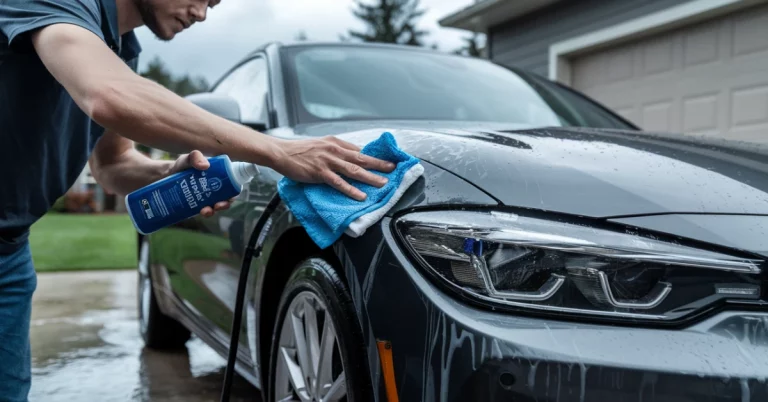
Waterless sprays use zero gallons of water. Brands like Meguiar’s Ultimate Waterless Wash and Chemical Guys Waterless Car Wash are biodegradable and safe for painted surfaces. Spray on, wipe off with a microfiber cloth. Done in 15–20 minutes.
For a full step-by-step, see how to wash a car without water.
Low-Water Bucket Method
Two buckets, one wash mitt, and 5–10 gallons of water. That’s 90% less water than a hose wash. One bucket holds soapy water; the other holds clean rinse water to wring out your mitt between passes.
It works. Learn the exact process in this guide on how to wash a car without a hose. A quality best car wash bucket setup with a grit guard prevents scratches while you work.
Commercial Car Washes — Often Exempt
Many water authorities exempt commercial car wash facilities that recirculate and recycle water. These facilities use 15–30 gallons per vehicle — up to 70% less than a home hose wash. If your municipality has restricted residential washing, a licensed commercial wash is often your cleanest legal option.
Call ahead or check the facility’s website. Confirm they use a water reclamation system. That’s the key qualifier for most exemptions.
Key Exceptions and Gray Areas
Restrictions aren’t always absolute. Several exemptions exist, though they vary by region.
- Health and safety: If your windshield or mirrors are obscured by mud, dust, or ash, cleaning for visibility is generally defensible.
- Collected rainwater: Permitted in most jurisdictions where rainwater collection itself is legal. See the full guide on washing car with rain water for what’s allowed.
- Commercial fleet vehicles: Some cities allow exemptions for vehicles that legally must stay clean (food transport, medical supply).
- New vehicle purchases: A handful of municipalities allow a single initial wash — check your local ordinance.
When Health and Safety Override Restrictions
Visibility is a legitimate safety concern. Post-wildfire ash, construction site mud, and heavy dust accumulation affecting your sight lines can justify a minimal targeted clean. Document the condition if you’re concerned about enforcement.
Tips for Staying Compliant and Eco-Conscious
Start here: search “[your city] water restriction ordinance” and find the actual municipal code. That’s the only way to know what’s permitted and what isn’t.
Beyond that, a few practical steps help:
- Time your wash — some restrictions allow washing before 9 a.m. or after 6 p.m.
- Use a nozzle with shutoff — if washing is permitted, a water pressure for car wash guide can help you find efficient settings that reduce waste.
- Apply ceramic coating — surfaces with best ceramic coating for cars protection repel dust and contaminants longer, reducing how often you need to wash.
- Use the time for interior care — restrictions don’t stop you from how to detail the inside of a car, which needs no water at all.
Waterless and bucket methods aren’t just restriction-era workarounds. Many detailers use them year-round. They’re gentler on paint, cheaper per wash, and genuinely effective.
The Bottom Line
Washing your car with a hose during active water restrictions is usually illegal. Fines are real. But you’re not stuck.
Waterless products, the bucket method, and water-recirculating commercial washes keep your car clean without breaking the law. Check your local ordinance, pick the right method, and stop worrying about fines.