Best Wet Dry Vacuum for Car Detailing: 8 Top Picks Tested and Compared

A household vacuum won’t cut it. Vehicle interiors demand narrow tools, strong airflow, and enough reach to get under seat rails, into crevice gaps, and across full cargo floors. A dedicated wet/dry vacuum handles all of that — plus liquid spills that would destroy a standard vacuum motor.
Before you buy, understand one key distinction: wet pickup removes liquid from surfaces, but it does not inject cleaning solution. That’s a carpet extractor’s job. If you want to detail the inside of a car properly, you’ll need the right tool for each task.
Our top pick for most readers is the RIDGID WD4070. It balances suction, portability, and price better than anything else in its size class. Keep reading for the full breakdown.




Best Wet/Dry Vacuum for Car Detailing: Quick Comparison
| Model | Best For | Tank | Motor Rating | Hose Reach | Wet Pickup | Portability |
|---|---|---|---|---|---|---|
| RIDGID WD4070 | Best Overall | 4 gal | 5.0 PHP | ~6 ft | ✓ | High |
| Vacmaster Beast VFB511H | Embedded Dirt & Pet Hair | 5 gal | 5.5 PHP | ~7 ft | ✓ | Medium |
| Armor All AA255W | Budget Pick | 2.5 gal | 2.5 PHP | ~5 ft | ✓ | Very High |
| Bissell Garage Pro | Wall-Mounted | 5 gal | 6.0 PHP | ~20 ft | ✓ | Fixed |
| RIDGID 6-Gallon Pro Pack | Mobile Detailing | 6 gal | 5.0 PHP | ~7 ft | ✓ | High |
| DEWALT DXV06P | Portable Mid-Size | 6 gal | 4.25 PHP | ~6 ft | ✓ | Medium |
| Shop-Vac 5-Gal Hangup Pro | Small Garages | 5 gal | 4.5 PHP | ~6 ft | ✓ | Medium |
| Stanley 6-Gallon | Long Reach | 6 gal | 4.0 PHP | ~8 ft | ✓ | Medium |
PHP = Peak Horsepower (manufacturer-advertised). Water lift and CFM ratings are more meaningful for real-world performance.
How to Read the Comparison Table
Peak horsepower figures appear large. They’re often misleading. A vacuum rated at 6.0 PHP may produce less real-world suction than a 5.0 PHP unit with better airflow design. Look at water lift (inches of H₂O) and cubic feet per minute (CFM) when available — these measure actual pulling power and airflow, not peak motor draw.
1. RIDGID WD4070 — Best Overall Compact Shop Vac
The RIDGID WD4070 is the easiest recommendation for most car owners. It’s compact enough to carry around a vehicle, powerful enough to pull sand and pet hair from carpet, and built to handle wet spills without drama.
Key Features
- Compact 4-gallon body → moves easily between doors, seats, and cargo areas
- Strong motor suction → clears embedded sand and crumbs in fewer passes
- Wet/dry capability → handles damp floor mats and small spills safely
- Standard 1-7/8″ hose port → accepts a wide range of aftermarket detailing tools
Pros and Cons
Pros
- Best power-to-size ratio in its class
- Easy to lift and reposition around a full vehicle
- Handles both dry debris and occasional liquid pickup well
- Wide aftermarket accessory compatibility for detailing upgrades
Cons
- Stock jobsite tools aren’t designed for delicate interior surfaces
- Extended use can be louder than expected for residential driveway work
- Filter swap required between dry and wet cleaning sessions
Pricing
Mid-budget pricing. Sits well below professional-grade units without sacrificing core wet/dry performance.
Our Verdict
Check the RIDGID WD4070 specifications before buying to confirm current accessory compatibility and warranty. It’s the right call for DIY detailers who want one reliable vacuum for regular interior sessions without investing in a dedicated garage setup.
2. Vacmaster Professional Beast VFB511H — Best for Embedded Dirt and Pet Hair

This one means business. The Vacmaster Professional Beast VFB511H is built for detailers who deal with stubborn pet hair, deep carpet debris, and interiors that haven’t been cleaned in months.
Key Features
- High-output motor → faster removal of sand, grit, and embedded carpet fibers
- Fine-dust cartridge filter → captures small particles without blowback into the vehicle
- Larger canister capacity → fewer stops to empty during a full detail session
- Extended hose reach → covers rear cargo areas without repositioning the unit
Pros and Cons
Pros
- Aggressive dry suction for neglected interiors
- Cartridge filter handles fine dust without clogging quickly
- Capacity supports continuous work across multiple vehicles
- Professional-oriented build quality for frequent use
Cons
- Bulkier than compact options — harder to carry up stairs or into tight spaces
- Noisier than smaller units during extended sessions
- Performance drops if the wrong filter is installed
Pricing
Mid-range to premium. Costs more than the RIDGID WD4070, but the step up in suction justifies it for heavy-duty work.
Our Verdict
Verify the Vacmaster Professional Beast specifications to confirm the current hose diameter and included tools. If you’re battling pet hair regularly, pair it with a rubber bristle brush first — strong suction alone doesn’t lift deeply woven hair. Learn more about the full process in our guide on how to remove pet hair from car interiors.
3. Armor All AA255W — Best Budget Wet/Dry Vacuum

Don’t overcomplicate it. The Armor All AA255W is for drivers who want wet/dry capability without spending much or storing a large machine.
Key Features
- Compact 2.5-gallon design → fits in a trunk or under a workbench easily
- Wet/dry operation → cleans up drink spills and dry crumbs without switching units
- Car-specific accessories included → works in seat gaps, cup holders, and vents
- Lightweight construction → easier to carry than any full-size shop vac
Pros and Cons
Pros
- Lowest price point with genuine wet/dry capability
- Easy to store in small apartments or garages
- Convenient for quick 10-minute cleanup sessions
- Car-oriented nozzles give it an edge over generic compact vacuums
Cons
- Smaller tank fills faster during liquid pickup tasks
- Not built for daily professional use or heavy debris loads
- Requires more passes on deeply soiled carpet than larger units
Pricing
Budget-friendly. Priced below most competitors, making it an accessible first wet/dry vacuum.
Our Verdict
The AA255W won’t replace a proper shop vac for serious detailing work. It’s ideal for the driver who wants something compact for routine upkeep — crumbs, floor mat dust, and the occasional coffee spill.
4. Bissell Garage Pro — Best Wall-Mounted Car Detailing Vacuum

A permanent garage solution changes everything. The Bissell Garage Pro mounts to the wall, stays out of the way, and gives you a long hose that reaches every corner of a vehicle without moving the unit.
Key Features
- Wall-mounted design → eliminates floor clutter and frees up storage space
- 20-foot hose reach → covers the full length of an SUV or truck from one outlet
- Multi-tool accessory kit → handles crevices, upholstery, floors, and tight console gaps
- Wet/dry plus blower mode → supports cleanup and drying across multiple surface types
Pros and Cons
Pros
- Exceptional reach makes it the easiest unit to use around a full vehicle
- Permanent installation means it’s always ready — no setup time
- Accessory set covers most interior detailing tasks without upgrades
- Blower mode useful for clearing vents and drying seams
Cons
- Zero portability — useless outside the garage
- Installation requires wall mounting and dedicated space
- Overkill for users who only detail occasionally
Pricing
Premium tier. The highest price of this group, but the long-term convenience justifies it for frequent garage detailers.
Our Verdict
Review the Bissell Garage Pro details for mounting dimensions and hose specifications before installation. This is the best choice for a homeowner with a dedicated garage who cleans vehicles weekly and wants a tidy, always-ready system.
5. RIDGID 6-Gallon Pro Pack — Best for Mobile Detailing
Mobile detailing requires equipment that travels well. The RIDGID 6-Gallon Pro Pack handles frequent loading and unloading without falling apart, making it a practical choice for operators moving between driveways.
Key Features
- Six-gallon tank → supports a full interior session on larger vehicles
- Durable molded body → withstands van or trailer transport without cracking
- Drain port access → simplifies liquid emptying between jobs
- Standard hose and tool compatibility → works with aftermarket detailing adapters
Pros and Cons
Pros
- Handles daily transport better than comparable compact units
- Practical tank size for full interior work on SUVs and trucks
- Compatible with generator power for off-grid mobile setups
- Good balance of capacity and carry weight
Cons
- Requires reliable mains power or a properly sized generator
- Stock tools may need upgrading for fine interior work
- Can be loud in quiet residential neighborhoods
Pricing
Mid-range. Priced fairly for the tank size and build quality it offers.
Our Verdict
If you’re running a mobile operation, plan your power setup carefully. Check our roundup of the best generator for mobile detailing to match output requirements before you rely on the RIDGID Pro Pack at a customer’s driveway without mains access. Also review our guide on how to start a mobile detailing business for a complete equipment checklist.
6. DEWALT DXV06P — Best Portable Mid-Size Option
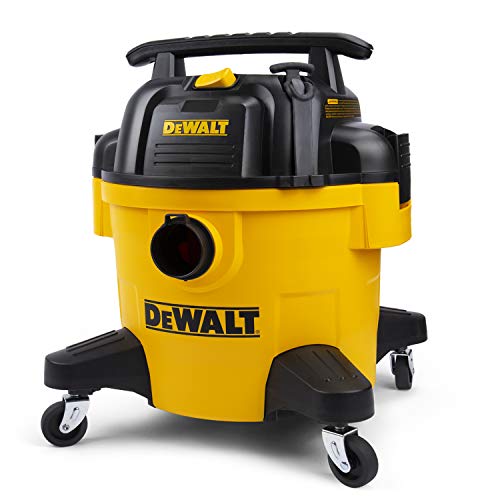
Sometimes a compact vacuum is too small and a full professional unit is too much. The DEWALT DXV06P fills the gap for home detailers cleaning two or more vehicles.
Key Features
- Six-gallon capacity → handles full interior sessions without constant emptying
- Integrated hose and cord storage → reduces setup clutter between uses
- Balanced chassis design → manageable movement around different vehicle sizes
- Wet/dry operation → covers everyday debris and minor liquid spills
Pros and Cons
Pros
- Useful tank size for larger vehicles like SUVs and minivans
- DEWALT brand support makes finding replacement parts straightforward
- Handles dry and wet messes without switching units
- Good garage portability for a six-gallon class machine
Cons
- Stock attachments are functional but not optimized for precision detailing
- Larger footprint than the Armor All or RIDGID WD4070
- Comparing specs across brands can be confusing without independent test data
Pricing
Mid-range. Competitive with the RIDGID Pro Pack and worth comparing directly at point of purchase.
Our Verdict
The DXV06P suits a homeowner detailing multiple vehicles on weekends. It’s more capable than compact car vacuums but doesn’t demand the space of a professional unit. A useful middle ground.
7. Shop-Vac 5-Gallon Hangup Pro — Best for Small Garages
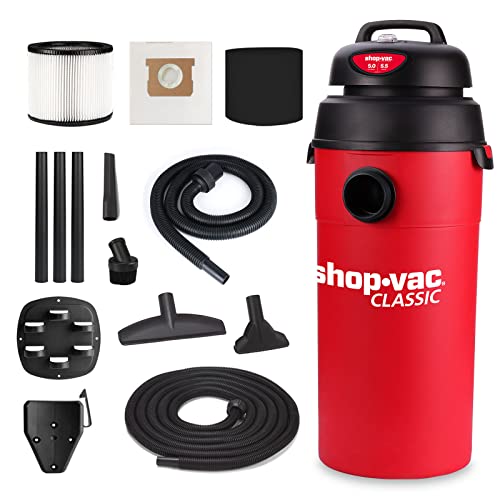
Space matters. The Shop-Vac 5-Gallon Hangup Pro targets users who need wet/dry capability but can’t spare floor or shelf space for a standard canister.
Key Features
- Hangup storage design → mounts on a wall or stores compactly on a shelf
- Five-gallon tank → handles routine interior jobs without frequent emptying
- Flexible hose arrangement → easier to work in tight two-car garages
- Wet/dry function → covers spills and dry debris in a single unit
Pros and Cons
Pros
- Best-in-class storage footprint for its capacity range
- Practical for occasional interior cleaning and spill response
- Easier to access than floor-standing units in small spaces
- Budget-to-mid pricing reduces the financial commitment
Cons
- Not ideal for mobile use or transport between locations
- Mounting setup requires some planning before first use
- Accessory quality should be verified before purchase
Pricing
Budget to mid-range. A reasonable investment for small-garage users who want wet/dry capability without committing to a large machine.
Our Verdict
If floor space is your main constraint, this is the right pick. It won’t outperform the RIDGID WD4070 on raw suction, but it handles the basics and stores out of the way when not in use.
8. Stanley 6-Gallon Wet/Dry Vacuum — Best for Long Reach

Big vehicles need longer reach. The Stanley 6-Gallon offers a useful combination of moderate tank size and total hose-plus-wand reach, making it easy to clean an SUV or truck from a single outlet position.
Key Features
- Six-gallon tank → longer sessions with fewer interruptions on large vehicles
- Extended combined hose and wand reach → covers front-to-rear without repositioning
- Wet/dry operation → handles dry debris and liquid messes in one unit
- Standard shop-vac hose compatibility → allows future accessory upgrades
Pros and Cons
Pros
- Useful capacity for SUVs, trucks, and vans
- Good reach reduces fatigue during a full vehicle detail
- Accessible format for DIY buyers without professional budgets
- Compatible with generic shop-vac accessory kits
Cons
- Less compact than car-specific units for tight storage
- Published suction figures require careful interpretation — verify against water lift where possible
- Stock tools not optimized for fine trim and seam work
Pricing
Budget to mid-range. One of the more affordable six-gallon options in this group.
Our Verdict
The Stanley 6-gallon model suits owners of larger vehicles who don’t want to interrupt a cleaning session to reposition their vacuum. Reach and capacity make it a practical daily-use choice.
How to Choose the Best Wet/Dry Vacuum for Car Detailing
This matters more than any single spec number.
How Much Suction Does Car Detailing Require?
More isn’t always better. Most car interiors need consistent airflow across narrow tools — not brute force. A vacuum with 60–80 inches of water lift and 80–100 CFM handles embedded carpet debris, pet hair, and light wet pickup without blowing trim off your dashboard. Peak horsepower tells you almost nothing. Focus on water lift and CFM when manufacturers publish them.
If you’re building a full mobile setup, also check our guide on best water tanks for car detailing to plan your complete wet-cleaning system.
Is a 4- to 6-Gallon Tank Large Enough?
For most detailers, yes. A 4-gallon tank handles a sedan’s interior in one session. Six gallons suits SUVs and trucks. Larger tanks add weight and bulk without meaningful performance gains for vehicle work. Think about how often you want to stop and empty — that guides your decision more than capacity alone.
For how to start a mobile detailing business, a 6-gallon unit with a drain port is the practical standard.
Do You Need a Dedicated Extractor?
A wet/dry vacuum removes liquid. It does not inject solution. Deep fabric stains, soaked carpets, and heavily soiled upholstery need a carpet extractor — a separate tool entirely. Don’t expect a shop vac to replace one.
Key buying criteria at a glance:
- Airflow (CFM): Determines how quickly debris lifts into the hose
- Water lift (inches H₂O): Determines pulling strength against resistance
- Hose diameter: 1-7/8″ is standard; 2-1/2″ increases airflow for larger debris
- Total reach: Cord + hose + wand length determines how far you can work
- Filter type: Cartridge for dry work; foam sleeve required for wet pickup
- Drain port: Speeds up liquid emptying significantly
- Blower mode: Useful for vents and seams — but never blow across a freshly cleaned surface
Wet/Dry Vacuum vs. Dedicated Car Vacuum vs. Extractor
These are three different tools. Confusing them leads to disappointing results.
A wet/dry shop vac handles both dry debris and liquid pickup, uses a wide hose, and suits garages and mobile setups. A dedicated the best portable car vacuum cleaner is lighter and quieter but typically handles dry work only, making it better for quick maintenance between full details. A best extractor vacuum for car detailing injects cleaning solution into fabric and recovers it through a specialized nozzle — the right tool for stained seats and carpets.
For hard surface cleaning, how to steam clean inside of car is worth reading. Steam handles bacteria, odors, and grime on plastics and vinyl that a vacuum alone won’t touch.
Choose safer interior cleaning products that work alongside your vacuum without leaving chemical residue that damages trim or fabric over time.
The right tool depends entirely on your task. A shop vac covers routine maintenance. Add an extractor when fabric work demands it.
How to Use a Wet/Dry Vacuum Safely on a Car
Safety first. Always.
Before picking up liquid, swap your dry cartridge filter for the foam wet filter. Running a cartridge filter submerged in water damages it and reduces filtration permanently. Check your manual — some units can run filter-free for wet pickup only.
Keep the vacuum body and electrical connections away from standing water. Follow electrical safety guidance for wet work areas — corded equipment near moisture requires proper outlet protection, including GFCI outlets in garage environments.
Safe use checklist:
- Install the correct filter before switching between dry and wet tasks
- Empty and rinse the tank after every wet pickup session
- Never vacuum flammable liquids, hot ash, or sharp metal debris
- Use narrow tools carefully around leather, soft trim, and exposed sensors
- Clean or replace filters when suction drops noticeably
- Dry the tank and hose thoroughly before storage
After vacuuming, use the best microfiber towels for car detailing to wipe down surfaces and pick up fine dust the vacuum may have stirred up. Always follow up with a how to detail the inside of a car checklist to finish the job properly.
Frequently Asked Questions
What is the best wet/dry vacuum for car detailing?
The RIDGID WD4070 is the best overall choice for most users. It balances portability, suction, and price better than any other compact shop vac in its class.
Is a shop vac good for detailing cars?
Yes — with the right attachments. A shop vac’s strong airflow and wet/dry capability make it more useful than a household vacuum for vehicle interiors. Stock tools often need upgrading for fine detailing work.
Can you use a wet/dry vacuum on car seats?
Yes. Use an upholstery nozzle for fabric seats. For leather, use a soft brush attachment to avoid scratching. Never press hard attachments into perforated leather.
Can a wet/dry vacuum extract carpet shampoo?
It can remove some surface liquid, but not efficiently. A carpet extractor is built for that job. A shop vac lacks the nozzle geometry and solution injection system needed for proper extraction.
What size wet/dry vacuum is best for a car?
4 to 6 gallons covers most vehicles. Four gallons suits sedans; six gallons handles SUVs and trucks without constant emptying.
Is higher peak horsepower always better?
No. Peak horsepower reflects motor draw at stall — not real-world suction. Water lift and CFM are far more useful performance indicators.
Do you need a foam filter for wet pickup?
Yes. A dry cartridge filter will be damaged by liquid. Always install the foam sleeve or wet-rated filter before picking up water or wet debris.
How do you remove pet hair with a shop vac?
Agitate first. A rubber bristle brush or squeegee loosens embedded hair from carpet fibers. Then vacuum. Suction alone rarely removes deeply woven pet hair in one pass.
Can you use a wet/dry vacuum to dry a car interior?
Blower mode can assist with seams and vents. It doesn’t dry fabric or carpet — you’ll need airflow from fans or a heated extractor for that.
How often should the filter be cleaned?
Tap out dry filters after every session. Replace cartridge filters every 3–6 months under regular use. Check suction performance — a noticeable drop means the filter needs attention.
Final Verdict
For most readers, the RIDGID WD4070 is the clear winner. It’s compact, powerful, and handles both wet and dry work without a large footprint.
Need heavy-duty pet hair and embedded debris removal? Go with the Vacmaster Professional Beast VFB511H. Working in a dedicated garage? The Bissell Garage Pro wall-mounted system gives you the best daily-use convenience. Budget-limited? The Armor All AA255W covers the basics at the lowest cost. Running a mobile operation? The RIDGID 6-Gallon Pro Pack travels well and handles full sessions.
Whatever you choose, invest in a proper detailing attachment kit. The vacuum is only as useful as the tools attached to it. Pair it with the right accessories and a solid process — and your car’s interior will look better with every session. Finish off your kit with the best car wheel brushes for a complete exterior and interior setup that covers every angle of a proper detail.